
Joint Doctrine
The JESIP Joint Doctrine provides the nationally recognised framework for multi-agency interoperability across the United Kingdom. It sets out the principles, structures and tools that help emergency services and partner organisations work together effectively during incidents and emergencies.
The doctrine establishes a common approach to communication, coordination, shared situational awareness and joint decision-making, enabling organisations to work together, save lives and reduce harm. Originally developed to improve the management of major incidents, the doctrine is scalable and equally relevant to day-to-day operational activity, planned events, exercises and wider emergency preparedness.
The most recent national review of the doctrine found strong evidence that the fundamental principles of JESIP remain relevant, effective and widely supported across the responder community. The review concluded that many interoperability challenges arise not from deficiencies in doctrine, but from the need to strengthen implementation, exercising, organisational learning and capability development.
The Joint Principles
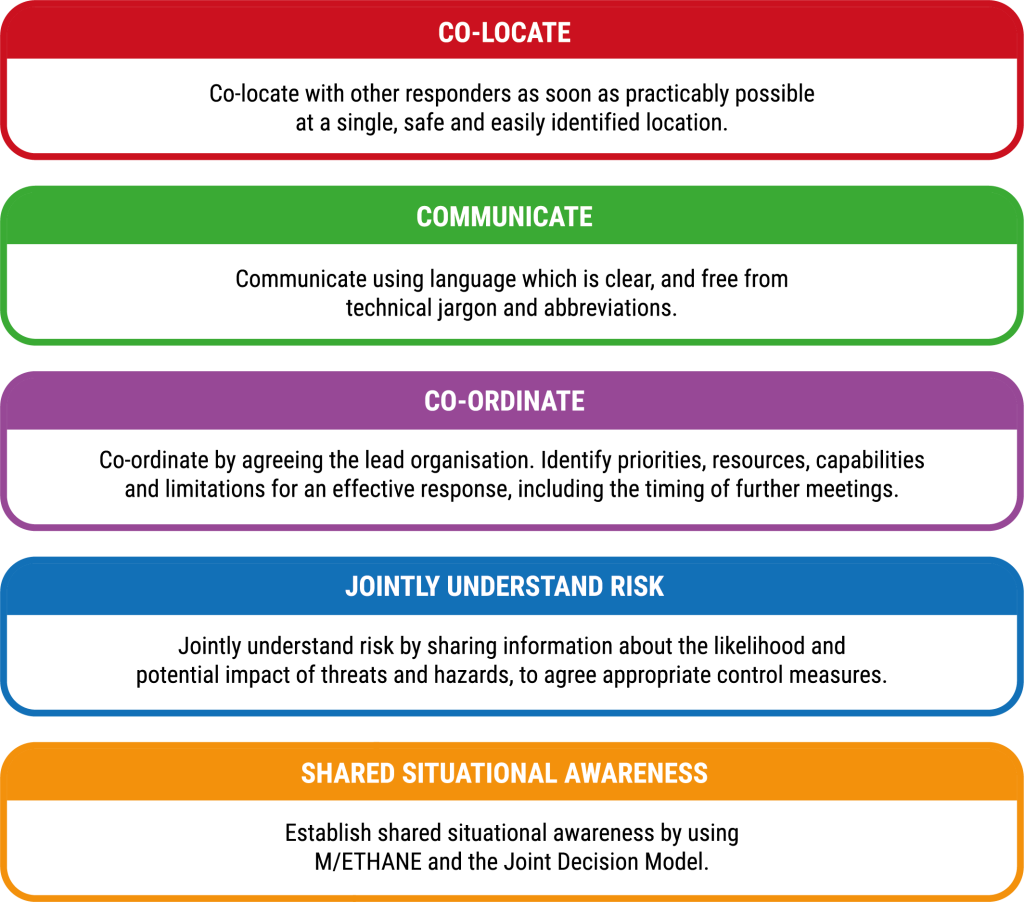
At the heart of the doctrine are five Joint Principles which provide a simple and memorable framework for effective multi-agency working.
- Co-locate with other responders as soon as practicably possible.
- Communicate clearly using plain language.
- Co-ordinate priorities, resources, capabilities and activity.
- Jointly Understand Risk through shared information and assessment.
- Establish Shared Situational Awareness to support effective joint working.
These principles help organisations develop a shared understanding of incidents, align priorities and coordinate activity across organisational boundaries. Evidence from the Doctrine Review found that the Joint Principles continue to provide the foundation for effective interoperability.
Joint Decision Model
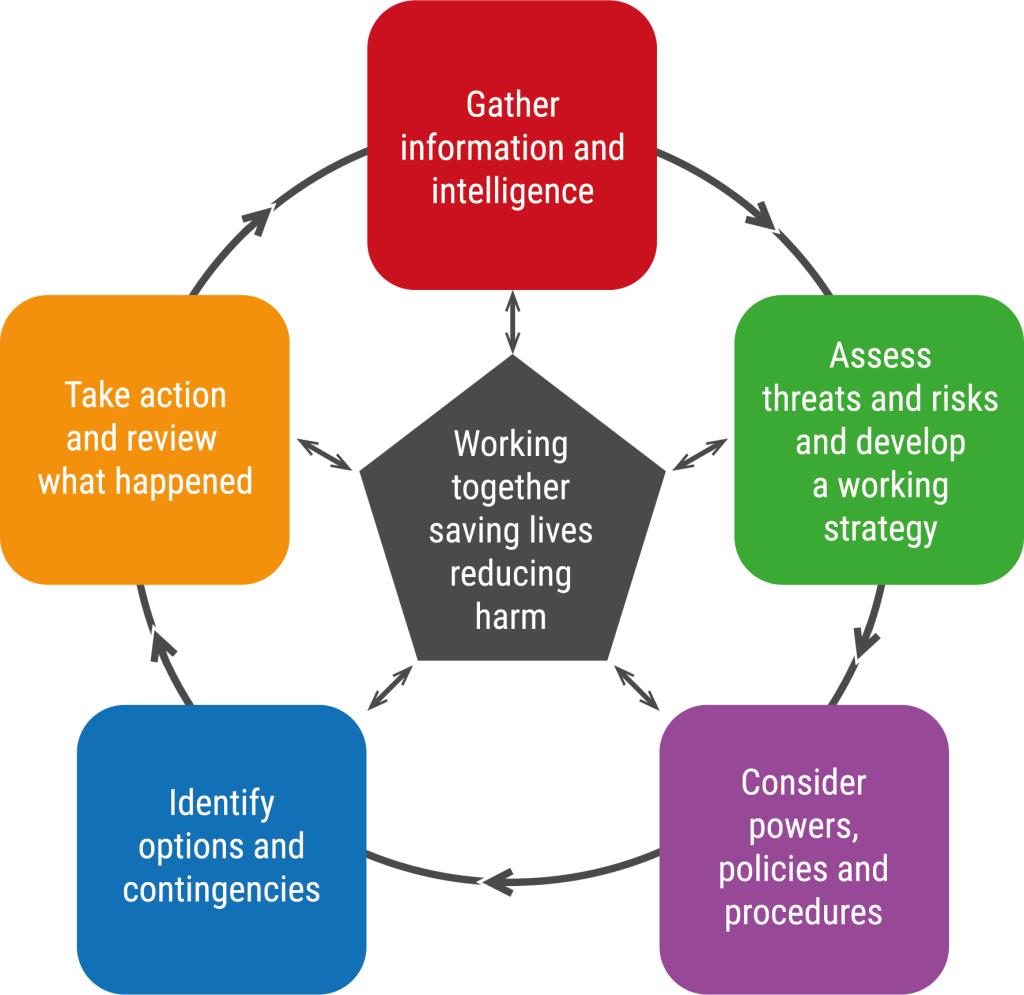
The Joint Decision Model (JDM) provides a structured approach to decision-making that helps responders bring together information, understand risk, reconcile objectives and make effective decisions together.
The model supports communication, situational awareness and coordinated action, ensuring that decisions are regularly reviewed as incidents develop. The Doctrine Review found strong evidence supporting the continued use of the Joint Decision Model as one of the core components of the interoperability framework.
Core Components of the Interoperability Framework
The doctrine is supported by a number of interconnected components that help organisations apply interoperability principles consistently in operational environments.
M/ETHANE
A structured method for sharing critical incident information during the earliest stages of a response, supporting communication and shared situational awareness.
Common Operating Picture
A shared understanding of an incident that enables organisations to coordinate activity, understand risk and make effective decisions together.
Multi-Agency Response Structures
Nationally recognised command and coordination arrangements that support effective multi-agency leadership, communication and accountability.
Joint Organisational Learning
The national mechanism for capturing, sharing and acting upon interoperability learning from incidents, exercises and assurance activity.
Supporting Guidance
The Joint Doctrine is supported by a range of additional guidance, Joint Operating Principles, tools and implementation resources that help organisations apply interoperability principles in practice.
These resources provide practical support across a range of operational contexts and include guidance on specific capabilities, threats, risks and responder responsibilities. They are designed to help organisations embed interoperability through planning, training, exercising and operational response.
Some resources are published openly through this website, while others are distributed to responder organisations through appropriate secure channels where operational sensitivity requires controlled access.